
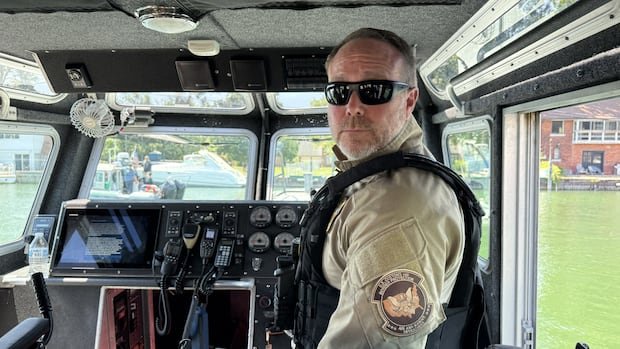
CBC News conducted an on-the-ground look at U.S. Customs and Border Protection (CBP) operations in and around Detroit, a region where the border runs along the Detroit River and connects Michigan to Ontario. The reporting trips, conducted over two days with CBP personnel, aimed to illuminate the day-to-day realities faced by agents, beyond political rhetoric at the federal level.
Images and firsthand accounts depict CBP personnel, including marine interdiction agents, actively patrolling by land and water and engaging in routine surveillance along the river. One agent described his role as part of a broader effort to monitor a high-traffic, high-risk corridor that includes water routes used by both legitimate commerce and illicit activity. A member of CBP noted the complexity of enforcement in a border area where legal cross-border travel is commonplace and where winter conditions, geography, and urban infrastructure present unique challenges.
The piece emphasizes that security concerns in this sector are not exclusively about contraband crossing from Canada into the United States. Officials pointed to multiple vectors of risk, including potential smuggling activity that could move in either direction, as well as the need to adapt to evolving tactics by traffickers. The Detroit sector, which covers Michigan, Ohio, Indiana, and Illinois, relies on a mix of border terrain, port-of-entry operations, and marine interdiction to manage these threats.
While political commentary at the national level has highlighted accusations of Canada permitting illicit drugs and traffickers, the CBP perspective presented in this reporting cycle centers on arrest records, interdiction efforts, and ongoing patrol operations that illustrate a broader, bidirectional threat landscape. The article underscores the importance of interagency cooperation, cross-border information sharing, and sustained resources to address evolving risks on one of North America’s busiest border corridors.